
Last Updated 2.15.2. (G)
The world's leading authority on climate change, the UN's Intergovernmental Panel on Climate Change [IPCC], is not accurately telling our governments what they need to know to save us from climate extinction because of...

The IPCC's ongoing "Perfect Day" problem.
Our governments are in serious trouble with climate risk analysis because they rely on the IPCC's "authoritative" projections and recommendations. Moreover, the world's governments, military, intelligence agencies, hedge funds, investment banks (like Goldman Sachs,) stock and commodity markets, foundations, think tanks, national and international reserve banks, the International Monetary Fund, the World Bank, and the World Economic Forum all use the same IPCC climate research, predictions, and remedies for their climate risk analysis.
All of the previously mentioned entities are being dangerously weakened by the IPCC's climate computer-modeling Perfect Day problem.
The Perfect Day problem and how it works
The IPCC uses computer modeling to predict future climate impacts and estimate the amount of global fossil fuel that must be reduced to mitigate risks. Every 3 to 5 years, the IPCC creates 4-7 updated best-to-worst climate prediction scenarios, along with recommendations on what we must do to prevent them from occurring.
Governments, organizations, corporations, and individuals that rely on these IPCC climate scenarios to conduct their internal climate risk analyses are being told by the IPCC and their governments that these scenarios are reasonably accurate projections of future climate conditions. Unfortunately, the truth is that they are far from it.
The IPCC's climate computer models actually reflect "Perfect Day" climate scenarios far more than they reflect more probable climate scenarios. The IPCC's climate computer models are plagued by the "Perfect Day" problem because they seldom include many of the following critical climate modeling factors. These are the critical climate-related, yet often overlooked, factors that occur within and between the complex adaptive systems that comprise our climate's multiple subsystems.
The IPPC's climate computer models and multiple predictive scenarios still fail to capture:
a. Many of the interconnected or interdependent primary and secondary tipping points within and between the climate system and its subsystems.
b. Most of the many powerful self-reinforcing feedback loops within and between the climate systems and their subsystems.
c. Most of the non-linear cause-and-effect relationships within and between the climate systems and their subsystems. (Non-linear cause and effect relationships are a regular aspect of the behavior of complex adaptive systems.)
d. Far too many of the cause-and-effect interconnections and critical interdependencies within and between the climate system and its subsystems. And,
e. Many of the critical points of no return within and between the climate systems and their subsystems. (These crucial points of no return help signal and predict coming tipping points and most often dangerous system crashes and collapses that occur after a tipping point is crossed.)
The result of omitting so many to most of the essential a-e factors above from climate computer models is that what you get is more like a Perfect Day prediction scenario. This Perfect Day climate scenario is one in which either no or far too few of the numerous factors are accounted for in the computer-modeled climate calculations and predictions.
Relating to a through e above, one of the most dangerous flaws of the IPCC in putting together its summary reports is its poor handling of the climate change known unknowns. In other words, instead of applying a reasonable consequence value and timeframe range to the hundreds of tipping points, feedback loops and non-linear reactions within the climate system and it subsystems, (which the climate scientists for those specialized climasystems are sub systems could reasonably estimate and produce,) the IPCC in its summary report calculations, simply says they're too complex or too uncertain. Consequently, it adds almost no consequence timeframe ranges into its calculations for those tipping points, feedback loops, and non-linear reactions either triggered by themselves or interacting with each other in accelerating cascades.
Cumulatively, this alone may be a far worse flaw in their summary reports than still using an outdated climate sensitivity of 3 for critical calculations, far below the realistic 4.5 climate sensitivity from extensive research by James Hansen. The result of not modeling into their final summary reports a defensible rational range of values for the consequences and time frames of triggered tipping points, activated feedback loops and non-linear reactions which naturally occur in in between climate systems and sub systems is that the IPCC's scenarios are far less worse than what would realistically happen as the climate system tipping points, feedback loops, and non-linear reactions start whip sawing into each other and triggering each other in a cascade reaction which we call the Climageddon Feedbaxck Loop.
If the IPCC actually inserted rational and defensible algorithmic value ranges for the consequences and time frames of triggered tipping points, crossed feedback loops, and non-linear reactions within the climate system and its subsystems, several critical things would happen. Politicians and corporations would truly see how bad and how dangerous the climate emergency is to them, their businesses, their nations, and their families. The same politicians and corporations would also see that, if they want a future with any kind of stability, they need to immediately make radical global reductions in fossil fuel use far beyond what they're currently being told. There are many fossil-fuel-producing nations, fossil-fuel-dependent companies, and politicians who rely on fossil-fuel contributions to their campaigns who will not want these more accurate climate change forecasts made public.
The crucial thing to know about items a-e above is that they embrace thousands of essential regularly unaccounted-for or under-accounted-for climate factors that are also at play in creating reliable and probable climate predictions and risk assessments. Moreover, many of the climate factors listed in a-e above are so powerful that just omitting a single one can radically alter the trajectory and usefulness of any of the IPCC's current climate prediction scenarios or suggested remedies.
For example, suppose the IPCC has predicted that the average global temperature will rise to 2 degrees Celsius above pre-industrial levels by 2040 in one of its scenarios. Now factor in that they did not incorporate essential tipping points, feedback loops, or other non-linear cause-and-effect factors within the climate system and its subsystems. In that case, this a-e omission could quickly move their predicted average global temperature rise of 2 degrees Celsius by 2040 (with all its associated risks and consequences) to well above 2 degrees Celsius, far sooner than 2040!
Worse yet, the world's political, corporate, and the leaders of the other organizations mentioned earlier do not know about the Perfect day issue, which is that the IPCC predictions and their remedial climate recommendations do not reliably computer model the contexts, relationships, processes, and many ongoing transformations within the interacting climate, human, and biological systems, and subsystems.
The "Perfect Day" problem means that the actual probabilities of climate risk and threat for humanity's future are being grossly underestimated. Unfortunately, this also means that our governments, largest corporations, and the leaders of the other organizations mentioned earlier are ALL currently operating on grossly inadequate climate risk assessments. As a result, within these organizations, the actual risk and threat levels of our current climate conditions, along with their fundamental uncertainties, are far higher than what they understand and what we are being told. Consequently, we are currently not managing or preparing for our actual climate risks and uncertainties.
At Job One, we estimate that if you take all of the factors in a-e above (and all the IPCC's many other political, prediction modeling, and summary report problems described in the additional links at the end of this page), we should treat the IPCC's current predictions and climate remedies as being underestimated on the average by about 20-40% or more. This means we are underestimating both the severity and frequency of climate consequences, and the time when these consequences will arrive by about 20-40%.
If one makes reasonable allowances of 20-40% for non-perfect-day climate effects in the items a-e above and for the other IPPC problems linked at the end of this page, the world's governments and corporations should be panicking.
On the other hand, if they were making appropriate allowances for the many climate factors and risks missing, the corporations listed previously would demand that our governments immediately declare an international climate emergency. They would also demand that our governments cooperate globally to enforce the reductions in fossil fuel emissions needed to at least save some portion of humanity. (If you would like to see the horrific chain of climate consequences with adjusted timelines when making allowances for the IPCC's problems, click here.)
But, here is the really bad news about the climate system factors listed in a-e above. As the climate continues to warm, its subsystems will become increasingly interactive, agitated, and unstable, leading to more frequent climate system consequences and more severe climate disruption.
Imagine these climate system factors interacting within the climate, churning and boiling like water in a pressure cooker as you turn up the heat. Unfortunately, as our temperatures continue to rise, the above climate factors will also occur at ever faster rates. This rising temperature will also create significantly more uncertainty in future climate predictions. This will reduce our ability to conduct effective risk analysis as the climate worsens.
Understanding this inherent dilemma of diminishing predictive power as temperatures rise helps us recognize that we must prevent the climate system from EVER crossing the first extinction-triggering tipping point. If we cross this extinction-triggering tipping point, global warming will enter a runaway mode, in which reliable predictions of climate consequences and timeframes will become all but impossible to make.
Due to the Perfect Day problem and significant gaps in the IPCC's climate model simulations, any organization that relies on the IPCC's data must immediately reassess its climate risks and adjust them downward by at least 30-60%. With this new modeling information, these organizations will then be able to create a far more realistic climate risk analysis tailored to their specific operations and conditions.
The biggest danger of the IPCC Perfect Day problem
The real climate change risk and threat level to all entities listed above is far beyond what they believe and are telling themselves, their citizens, or their clients. This serious risk analysis problem is not just dangerous. It will not only be very costly over time, but it will also likely become a serious legal liability for those entities, as their citizens and clients discover that the climate risk levels they were advised about were grossly underestimated.
The Perfect Day problem is also crippling our ability to identify and use the right collective climate-change management strategies needed to save humanity itself. Because of the IPCC's Perfect Day problem, we are not addressing the actual climate change risks in an appropriate and rational way.
As a result, we are operating on incorrect climate change risk and threat assessments that are far below what they actually are. And that will be the final recipe for a soon-arriving collective mass extinction.
The IPCC's climate change risk analysis suggests that the world still believes it has many decades to address the climate emergency and prevent extinction, when in fact it may have only about 3-6 years left. Yet, the IPCC continues to sell the world its grossly incomplete "Perfect Day" climate change prediction and remedy computer models and scenarios as reliable and probable representations of our climate future, when in fact they are grossly inadequate and underestimate the true impact.
We believe that when the entities listed above redo their climate risk analysis using the information on this website and other websites critical of IPCC climate work, and which also includes the climate factors listed in a-e above, they will discover the following:
-
- We are currently at a level of extreme climate change risk. We passed the high climate risk decades ago.
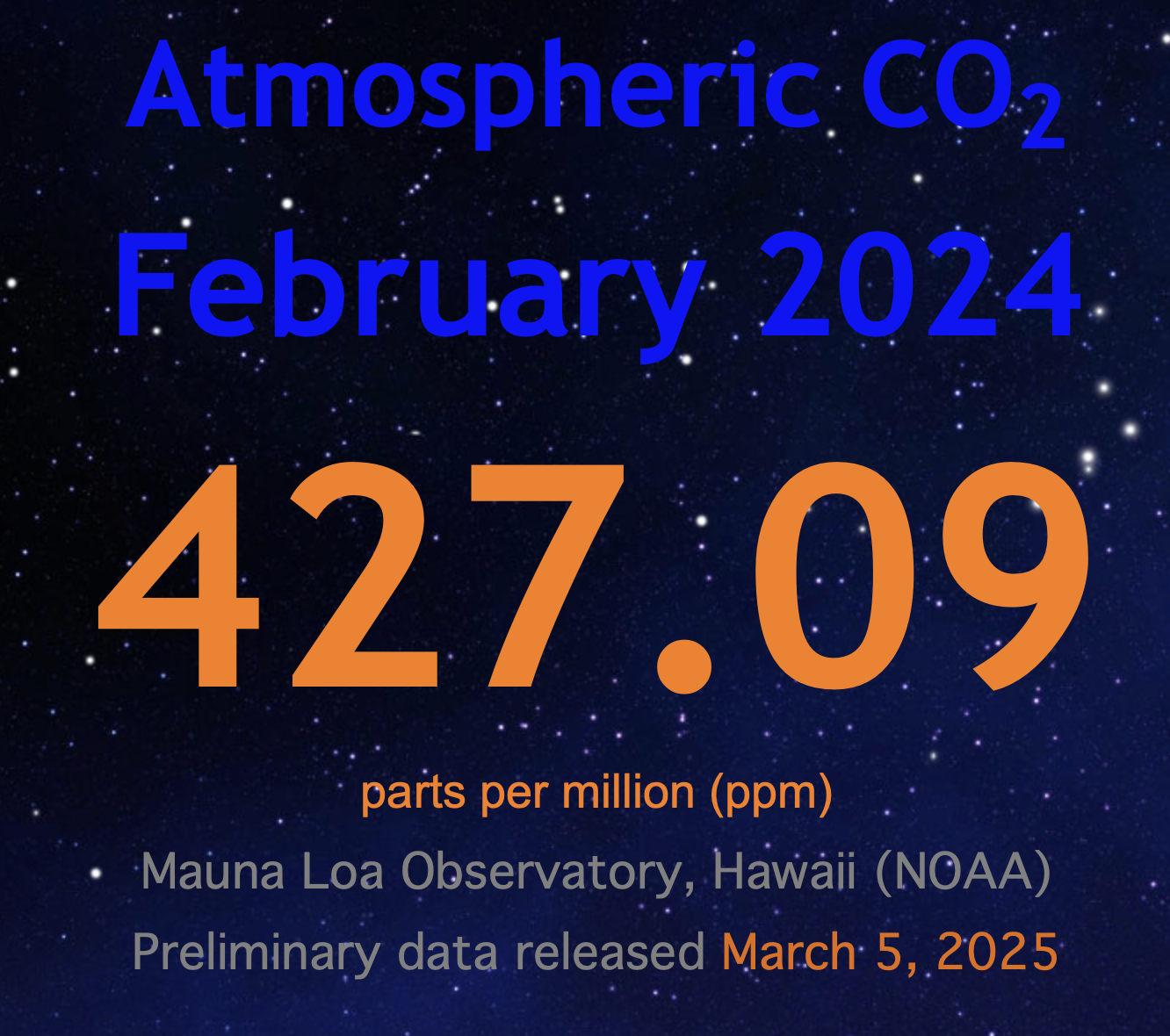
- When we cross the atmospheric carbon threshold of 425 to 450 parts per million (ppm), we have entered the climate risk zone of unavoidable extinction for much of humanity by 2050.
- When we cross the atmospheric carbon threshold of 450 to 500 ppm, we have entered the climate risk zone of near-total to total human extinction, which is expected to begin as soon as 2070 or sooner.
Here is just part of what is missing in the IPCC's "perfect day" flawed AR6 summary report
The following gets a bit technical. The IPCC's most dire AR6 projections discuss some tipping-point/feedback mechanisms, but far too many are not incorporated into the core, “assessed likely range” projections (or are treated only as low-likelihood, high-impact storylines and not as detailed in master projection calculations).
Below are the key climate system and subsystem tipping points, feedback loops, and non-linear reactions that are NOT included in AR6’s central projections, along with some concise, literature-based, quantitative deltas that you can use as “what-if” adjustments.
The truly alarming aspect is that these critical tipping points, feedback loops, or non-linear reactions are not adequately incorporated into current climate change consequence, timeframe, and solution calculations. This information is so critical that it is embarrassing that the IPCC and other research entities have not provided this information, and they have not funded additional research to further enhance the projections surrounding this critical missing data.
This information is crucial for accurate climate change predictions that are not 30 to 60% underestimated. It is shocking that government intelligence agencies and risk assessment firms for governments and major banking and corporate institutions have not fully funded and provided this essential information to the IPCC, if funding for the IPCC was the problem behind the glaring omissions below.
It is simply unbelievable that organizations like the International Monetary Fund, the World Bank, BlackRock, the Vanguard Group, Fidelity, and the world's largest insurance companies could be making climate change risk forecasts for their clients without this essential information. Clients of any banking, investment, insurance, or similar institution that has the IPCC's underestimated climate change estimates could be sued for losses and gross negligence.
This is not rocket science. This long-known IPCC information deficiency that could have and should have been obtained, resolved, and integrated into all climate change calculations, risk assessments, and forecasts long ago.
It is only a matter of time before the organizations mentioned above are held legally and financially liable for failure to disclose the accurate scale, nature, and time frames of the accelerating climate change emergency. If I were a C-suite executive in one of the organizations mentioned above, I would already have my legal department scrambling to update all our contractual and prospectus information to reflect the correctly adjusted climate risks, which are 30 to 60% worse than they are currently stated.
The missing or inadequately calculated items below can significantly or catastrophically impact average global and regional temperatures, carbon, and other greenhouse gases in the atmosphere, as well as rainfall levels, heat, and sea levels. These missing elements may be the very missing factors that determine humanity's long-term survival.
-
-
-
Abrupt permafrost thaw (thermokarst, retrogressive thaw slumps)
• How AR6 treats it: Assessed qualitatively; “most models do not represent abrupt thaw processes.” It could make previously protected deep carbon suddenly vulnerable. IPCC+1
• Illustrative calculation: The SR1.5 blanket adjustment suggested ~100 GtCO₂ reduction to the remaining carbon budget by 2100 from unmodelled Earth-system feedbacks; AR6 updated this to ~26 ± 97 GtCO₂ per °C of additional warming (central estimate is smaller, but uncertainty is wide). If warming to 2 °C, that’s a central ~50 GtCO₂ budget cut (but plausibly much larger). Independent syntheses of abrupt thaw suggest it can increase permafrost-carbon emissions by ~50% vs. gradual-thaw-only models, and could sum to ~300 (150–600) Gt CO₂-eq by 2100 under ~2–3 °C scenarios. constrain-eu.orgIPCCNatureUNFCCC -
Antarctic ice-shelf hydrofracturing & Marine Ice-Cliff Instability (MICI)
• How AR6 treats it: Considered, but not in the assessed likely SLR ranges; kept to low-likelihood, high-impact storylines because of low confidence in timing/triggering. IPCC+1
• Illustrative calculation: If MICI were triggered (esp. under very high forcing), studies show Antarctic contribution could exceed +1 m by 2100 relative to projections that omit it; central AR6 likely ranges don’t include that tail. IPCCNature+1 -
Stratocumulus-deck breakup (a cloud-feedback tipping)
• How AR6 treats it: Not included in core projections; it’s a theorized instability outside CMIP-scale models.
• Illustrative calculation: Large-eddy simulations indicate loss of subtropical stratocumulus above ~1,200 ppm CO₂ could abruptly add ~+8 °C global (and ~+10 °C subtropics) on top of CO₂-driven warming. That threshold is beyond most 2100 scenarios but matters for long-run risk management. CaltechAUTHORS -
Amazon rainforest dieback (climate–vegetation feedback)
• How AR6 treats it: Assessed as a risk; not embedded in central carbon-cycle projections (dynamic vegetation/tipping is incompletely represented).
• Illustrative calculation: Full dieback estimates would release ~53–70 PgC (≈ 195–257 Gt CO₂), substantially reducing remaining carbon budgets; several reassessments put tipping risks in the ~2–3 °C range (risk emerging earlier regionally). climatetippingpoints.infoNatureScience -
Boreal forest/soil carbon loss via escalating wildfire & “legacy” soil combustion (nonlinear disturbance feedback)
• How AR6 treats it: Disturbance feedbacks acknowledged; future soil-carbon losses from intensifying fire and deep-soil combustion are not fully represented in the core projections.
• Illustrative calculation: Recent constraints suggest global soils could turn into a net source of ~0.22–0.53 PgC yr⁻¹ this century (scenario-dependent), with boreal fires a major driver of loss of “legacy” soil carbon—shifting these regions from sink to source. That would erode carbon budgets over decades by tens of GtC if sustained. NaturePubMed -
Wetland methane acceleration (temperature-sensitive CH₄ feedback)
• How AR6 treats it: Discussed, but future wetland-CH₄ feedback is not explicitly coupled in the temperature projections used for headline ranges.
• Illustrative calculation: A process-based microbial model estimates ~+12% wetland CH₄ per +1 °C. Using a conservative baseline ~150–180 Tg CH₄ yr⁻¹, +1 °C implies ~+18–22 Tg CH₄ yr⁻¹. If sustained for 30 years, that’s ~0.54–0.66 Gt CH₄ cumulative; using AR6’s GWP100 ≈ 27.9 yields ~15–18 Gt CO₂-eq of added forcing-equivalent over that period (very approximate; atmospheric lifetime/oxidation aren’t fully accounted here). AGU Publications+1Greenhouse Gas Management Institute -
AMOC collapse (ocean-circulation tipping)
• How AR6 treats it: Very unlikely before 2100 and treated as a low-likelihood, high-impact storyline; not in central warming/SLR projections. IPCCPMC
• Illustrative calculation: If collapse occurred, studies show large regional climate shifts (e.g., strong cooling over parts of Europe and rainfall pattern changes) with global-mean effects smaller than regional—but no robust, single “delta °C” to add to AR6’s global warming range. In other words, impacts are big regionally, but not a simple global-mean adjustment. Science
-
-
When you exclude so many tipping points, feedback loops, and non-linear reactions from even the IPCC's most dire predictions and projections in their calculations, which affect the very survival of humanity and civilization, you will not be equipped with the data necessary to properly assess the risk of climate change consequences or their time frames. You will be so far out of step with applying the Precautionary Principle to the climate change emergency that your underestimated projections, in effect, put all of humanity at serious risk.
Even though the IPCC's worst case is still grossly underestimated, do not think that other organizations particularly well financed national intelligence agencies and well funded risk evaluation firms have not done calculations for the missing tipping points, feedback, loops, non-linear reactions, and the ongoing gross underestimation of the climate sensitivity at three when it should be at 4.5 or even moving towards six.
They know far more accurately how bad climate change is going to be and when its worst consequences are going to hit. However, they are not making this information public because, on a national level, it would cause widespread panic among the population. They are also not making it public because they can sell the information for hundreds of thousands of dollars a year to the largest corporations and billionaires who want to gain a competitive edge as things start to collapse.
Those who truly understand how bad the climate is going to get and how fast it's going to hit us are also building their survival bunkers or stockpiling everything they would need if their government were to need it as things spiral into chaos. Those regular citizens who are aware of this information are also emulating the actions of governments and billionaires, but on a much smaller and more humble scale.
We are now approximately 3-6 years away from surpassing the 450 carbon PPM threshold and entering the climate risk zone, where the likelihood of unavoidable extinction for much of humanity increases by 2050.
Building a plan, conducting a risk analysis, or creating a climate scenario based on the assumption that everything goes perfectly and without many of the climate change system's and subsystems' tipping points, feedback loops, and non-linear reactions has always been a recipe for failure. Unfortunately, because of the above, our world is in a far deeper climate change extinction emergency than it believes it is.
And finally, there is another way to grasp the dire danger of the IPCC's Perfect Day problem. Ask yourself, when was the last time everything went perfectly according to your projected perfect plan?
As a sidebar, almost every projection made by Job One For Humanity, which also accounts for the 30 to 60% underestimation error in IPCC data on temperatures and consequence timetables, has been accurate for the changing climate.
What can you do about the Perfect Day problem, which is drastically impeding our progress on executing effective climate solutions?
1. If you have any contacts with power at any of the organizations listed on this page, you can email them a copy of this article. It would also be helpful if you could refer them to this page. This page makes considerably better (but still not perfect) allowances for the IPCC's Perfect Day problem by more realistically adjusting climate consequence scenarios and timeframes to include and account for more of the above factors.
Here are the key organizations to contact so they can update their internal critical climate risk analysis, ensuring it better reflects today's actual climate reality. You will be doing them a favor! Unfortunately, operating on the IPCC's flawed climate prediction scenarios for their internal climate risk analysis will eventually embarrass them. It could also expose them to severe legal liability for incorrect actions or incorrect advice.
This risk assessment process may also help them take the logical and necessary steps to better manage the climate extinction emergency. There may be other entities you will think of as well:
World governments, the world's military, intelligence agencies, hedge funds, investment banks (like Goldman Sachs,) stock and commodity markets, foundations, think tanks, national and international reserve banks, the International Monetary Fund, the World Bank, and the World Economic Forum and corporations dealing with essential commodities and infrastructure needed for the future.
2. Get started with the Job One for Humanity Climate and Global Crises Resilience Plan.
Other critical IPCC consequence prediction and timetable problems that rapidly need to be adjusted for in future government and corporate climate risk analysis
1. Click here to see the four most crucial extinction-triggering tipping points that must be factored into every adjusted future climate risk analysis.
2. Click here to see how the accelerating primary and secondary consequences of climate change interact with and worsen humanity's 11 other major global crises.
3. Click here to see the risk analysis adjusted 2025 global fossil fuel reduction targets and why we must get close to a 75% reduction in total global fossil fuel use (oil, natural gas, coal, etc.) by 2025, not the far, far less net-zero emission levels they have pledged by 2050 or 2040! (In the technical notes at the bottom of the 2025 global fossil fuel reduction specification page, you will see each calculation and compensation for the various factors that make up the required correct global fossil fuel reduction numbers.)
4. In addition to the "Perfect Day" problem previously described, below you will find essential additional links on the checkered history of the IPCC climate consequence predictions and research problems. These links will provide valuable context for the relationships, processes, and climate research transformations underway within the IPCC.
You will learn precisely how the IPCC constructs and calculates its climate consequence risk scenarios and recommended climate change remedies. Unfortunately, you will also discover that there are many other serious calculation and process problems occurring within the IPCC, in addition to the Perfect Day problem. The additional problems below further call into question the reliability and usefulness of the IPCC's current prediction scenarios and climate remedies in terms of risk analysis.
(Please note: In the links below, we are not attacking or criticizing any of the thousands of hard-working and honest volunteer scientists worldwide who submit their climate research to the IPCC. Instead, we call attention to the IPCC's administrative processes and politicized leadership. They are the ones who alter and contort the real climate science received by these scientists into 5-7 year climate summary reports. Before they are released, these 5-7 year summary reports must get the line-by-line sign-off of the IPCC's major funders, the fossil fuel producing nations, and the fossil fuel-dependent nations.)
Click here to understand the long-term history of the IPCC underestimating the consequences, timeframes, and the needed global fossil fuel reduction targets by as much as 20-40% or more.
Click here to see precisely how the IPCC "cooked the books" and grossly skewed the current IPCC global fossil fuel reduction calculations by including unproven and non-existent "carbon sucking unicorn" technology into their projections.
Click here to see the eleven key climate change tipping points that have been mostly excluded from the IPCC calculations on how much fossil fuel use we must reduce each year globally.
Click here to see the four key reasons why the IPCC's 26 global climate conferences have failed to produce results or legitimate global fossil fuel reduction targets.
Click here to see the latest 2022 IPCC climate change summary report on the critical climate sensitivity error. Due to this ongoing climate sensitivity error alone, the IPCC's latest climate consequence predictions, timeframes, and remedial action information may be underestimated by as much as 25% or more. (This 25% does not include the effect of the other IPCC errors described in the links just above.)
Click here to view a new study revealing that the IPCC omits several crucial climate system factors from its computer climate models. Those missing factors result in incorrect and distorted outcomes. This February 2022 paper strongly refutes the absurd IPCC claim that the decline in Arctic sea ice melt is reversible. It is not reversible, and that is a monster problem for humanity's weather, seasonal climate, and future!
The decades of errors, calculations, and polarization problems linked above mean that the IPCC is an unreliable partner for truthful and accurate climate change information. Their climate consequence predictions, timeframes, and remedial action information are grossly underestimated by 30-60% and possibly more.
It is time to find new, more reliable sources of information for climate change prediction and management.

Showing 1 reaction