
Why the World Feels Broken: 15 Interlocking Global Crises Driving the Polycrisis. A definitive guide to the unfolding climate change-amplified global polycrisis from 2026 to 2050, containing the most critical timelines and the detailed steps for how 15 global systems can seriously destabilize our human civilization. It explains why the next few years matter critically --- if we want to preserve a livable future!

Last updated: 4.16.26
Executive summary: Humanity is not facing a single, cleanly bounded emergency. It is facing a near-Gordian knot of global ecological, economic, political, technological, public health, and security crises that increasingly reinforce and worsen one another. Climate change is the central driver in that knot, not because it explains everything, but because it multiplies heat, water stress, crop failures, migration pressure, insurance losses, infrastructure failures, debt, fear, and conflict risk across all domains
In other words, the world did not merely choose the “hard mode” for its Future. It appears to have paid extra for an accelerating and cascading, multi-system-level collapse mode.
This article will help individuals, government and corporate long-term planners, think tanks, investment banks, hedge funds, intelligence agencies, and organizations like the World Bank and the International Monetary Fund better map what's coming, so everyone can prepare for it and know where they may or may not want to live or run a business.
To overcome the cumulative and synergetic threats of the escalating global polycrisis (described below), the governments of the world will have to immediately begin cooperating at a level never before achieved in human history.
Please share this article.
Quick navigation
- How to read this page
-
The 15-polycrisis summary
- 1. Population Pressure and Uneven Demographic Growth
- 2. Overshoot, Overconsumption, and Critical Resource Depletion
- 3. Escalating Pollution of Air, Water, Soil, and the Food Chain
- 4. Biodiversity Loss and Ecological Breakdown
- 5. Mass Migration and Displacement
- 6. Escalating Crime, Conflict, Terror, and War
- 7. Global Economic Fragility and Financial Instability
- 8. Political System Instability and Government Failure
- 9. Authoritarianism, Executive Overreach, and Harder Nationalism
- 10. New Pandemics, Disease Outbreaks, and Antimicrobial Resistance
- 11. Inequality, Poverty, and Social Fracture
- 12. AI-Enabled Manipulation, Surveillance, and Mass Psychological Distortion
- 13. Accelerating Climate Change
- 14. Critical Infrastructure Fragility and Cyber-System Disruption
- 15. Geoeconomic Fragmentation, Trade Weaponization, and Supply-Chain Balkanization
- The 15 worst global polycrisis areas or nations
- Conclusion and Challenge
- FAQ
- Glossary
- References and bibliography
- Key internal Job One links
How to read this page
- Likelihood percentages are confidence estimates, not magical, precise point forecasts. They show the dominant direction of the data under current evidence.
- Climate is handled twice on purpose: as its own physical global crisis and as an amplifier inside the other crisis systems of the polycrisis
- A glossary is provided near the bottom of the page when needed.
As you read about the 15 major crises of the polycrisis below, try not to see them exclusively as a linear list of sequential problems. Rather, see them as integrated, interconnected, and interdependent systems encompassing the whole of the Earth as itself one interconnected and interdependent meta-system.
It is not going to be only the linear effects of each of these items that potentially brings humanity and civilization to its knees. It will be the amplifying interactions among many feedback loops, tipping points, and non-linear responses within and between these systems or areas, as they interact with other systems and areas of the polycrisis. That appears to be the single most difficult thing for our political leaders to understand.
The 15-crisis polycrisis summary in plain language
-
- Population pressure and urban concentration continue to raise demand for food, water, housing, infrastructure, and jobs.
- Overshoot means humanity is already drawing down resources and ecosystems faster than many can recover.
- Pollution continues to undermine health, agriculture, water, and food systems.
- Biodiversity loss weakens the ecological machinery that supports food, disease buffering, and resilience.
- Migration is rising because livelihoods, homes, and public order are becoming less reliable in many places.
- Conflict risk remains elevated where scarcity, grievance, and geopolitical rivalry converge.
- The global economy is slower, more indebted, more fragmented, and more shock-prone than it was a generation ago.
- Many governments are struggling to remain competent, legitimate, and future-oriented simultaneously.
- Authoritarian responses become more tempting as fear, uncertainty, and social stress rise.
- Pandemics and antimicrobial resistance remain live system-level threats, not historical curiosities.
- Inequality makes every other crisis harder to survive and more politically explosive.
- AI now scales manipulation, fraud, surveillance, and truth decay across populations.
- Accelerating climate change is both a direct destabilizer and a multiplier of most other crises on this page.
- Critical infrastructure and cyber fragility are now systemic risks in their own right.
- Geoeconomic fragmentation and the weaponization of trade make cooperation harder exactly when interdependence is deepest.
1. Population Pressure and Uneven Demographic Growth
The real issue is not just the growing population headcount. It is about where people are concentrated, how quickly demand grows, and whether institutions can keep food, water, housing, sanitation, energy, and jobs from becoming permanent triage.
a. Urban systems will face a much heavier strain as population and urban concentration rise.
Likely time range: 2026 to 2050
Estimated likelihood: Very high, about 90 to 95%
b. Food, feed, housing, and freshwater demand will keep climbing even where population growth slows later.
Likely time range: 2026 to 2050
Estimated likelihood: Very high, about 90 to 95%
c. Fast-growing regions with weak governance will see sharper competition over land, water, infrastructure, and employment.
Likely time range: Late 2020s to 2050
Estimated likelihood: High, about 75 to 85%

How accelerating climate change amplifies this crisis
Climate change multiplies this crisis by shrinking the reliability of what expanding populations need most: safe heat exposure, dependable water, stable food production, and livable cities. Hotter baseline temperatures, drought, floods, wildfire smoke, and loss of work capacity mean that the same city or region can support fewer people comfortably, even before absolute scarcity arrives.
Specifically:
- More dangerous heat, wet-bulb exposure, and hotter nights increase the risk of urban mortality and reduce safe outdoor work time.
- Drought, hydrologic whiplash, and water-quality degradation make fast-growing cities harder and more expensive to serve.
- Crop losses, food-price spikes, and migration pressure turn demographic stress into political stress much faster.
2. Overshoot, Overconsumption, and Critical Resource Depletion
This is the part where civilization learns that infinite extraction and growth targets on a finite planet are not, in fact, a sophisticated long-term strategy. Overshoot is already here. The bill just arrives in waves rather than one dramatic envelope.
a. Water stress and drought disruption will affect a much larger share of humanity.
Likely time range: 2026 to 2050
Estimated likelihood: Very high, about 85 to 95%
b. Food systems will face sharper pressure from degraded soils, stressed freshwater systems, and uneven access to fertilizer and key inputs.
Likely time range: 2030 to 2050
Estimated likelihood: High, about 75 to 90%
c. Marine food security will remain vulnerable where fisheries management is weak.
Likely time range: 2026 to 2050
Estimated likelihood: High, about 70 to 85%
d. Supply-chain volatility will intensify when water, soils, fisheries, energy, and input shortages interact.
Likely time range: Late 2020s to 2050
Estimated likelihood: Moderate to high, about 60 to 80%

How accelerating climate change amplifies this crisis
Climate change does not create overshoot from scratch. It punishes it. It slows ecosystem recovery, increases loss rates, and turns manageable scarcity into simultaneous multi-resource stress.
Specifically:
- Drought, desertification, and shrinking snowpack reduce renewable freshwater supplies and put pressure on food systems simultaneously.
- Ocean warming, acidification, and reef decline worsen fishery stress and coastal food insecurity.
- Wildfires, floods, and heat damage soils, forests, and infrastructure, increasing the throughput required just to maintain today’s living standards.
3. Escalating Pollution of Air, Water, Soil, and the Food Chain
Pollution is how the economy mails consequences to the future and then acts surprised when the future opens the package. Air pollution, chemical contamination, plastics, PFAS, fertilizer and nutrient runoff, and microplastics are now deeply embedded in the systems people eat, drink, and breathe through.
Specifically:
a. Air pollution, toxic exposure, and contamination-linked disease burdens will remain major drivers of premature death and disability.
Likely time range: 2026 to 2050
Estimated likelihood: Very high, about 90 to 95%
b. Plastic, PFAS, heavy-metal, and chemical contamination will continue moving through water, soils, crops, marine food webs, and human bodies.
Likely time range: 2026 to 2050
Estimated likelihood: Very high, about 85 to 95%
c. Pollution cleanup costs and agricultural losses from contaminated land and water will keep rising.
Likely time range: Late 2020s to 2050
Estimated likelihood: High, about 75 to 90%

How accelerating climate change amplifies this crisis
Climate change acts like an accelerant for pollution. Heat, floods, fires, and low-flow rivers remobilize contaminants, worsen ozone and smoke exposure, and spread pollution into places that previously had some buffer.
Specifically:
- Wildfires release carcinogenic PM2.5, heavy metals, and toxic combustion products across large regions.
- Flooding spreads sewage, industrial chemicals, mold, and sediment, contaminating homes, farms, and water systems.
- Warmer, slower rivers and reservoirs concentrate pollutants and increase the risk of harmful algal blooms.
4. Biodiversity Loss and Ecological Breakdown
Biodiversity is not decorative scenery. It is part of the machinery that regulates soils, pollination, fisheries, disease buffering, water quality, and ecological resilience. When it weakens, human systems inherit the chaos.
A. Species decline, habitat loss, and ecosystem fragmentation will continue eroding pollination, soil health, fisheries, and natural hazard buffering.
Likely time range: 2026 to 2050
Estimated likelihood: Very high, about 85 to 95%
b. Collapse risk will rise in vulnerable ecosystems such as reefs, wetlands, forests, freshwater systems, and some coastal nurseries.
Likely time range: Late 2020s to 2050
Estimated likelihood: High, about 75 to 90%
c. Ecological breakdown will increasingly spill into food insecurity, disease risk, and local economic failure.
Likely time range: 2030 to 2050
Estimated likelihood: High, about 70 to 85%

How accelerating climate change amplifies this crisis
Climate change is a direct demolition crew for ecological resilience. It changes temperature, rainfall, disturbance patterns, species ranges, ocean chemistry, and fire regimes faster than many ecosystems can adapt.
Specifically:
- Marine heatwaves, acidification, and deoxygenation accelerate reef decline and stress on marine food webs.
- Forest stress, wildfire, pest range shifts, and drought can push ecosystems from carbon sinks toward carbon sources.
- Range shifts and stressed habitats increase the risks of zoonotic spillover and vector-borne diseases.
5. Mass Migration and Displacement
Migration is one of the main ways system stress becomes visible in ordinary human life. People move when livelihoods fail, homes become unsafe, public order breaks down, or staying put no longer makes sense.
a. Internal displacement and cross-border migration pressures will keep rising, especially in fragile regions and hazard-prone corridors.
Likely time range: 2026 to 2050
Estimated likelihood: Very high, about 85 to 95%
b. Receiving regions will face more pressure on housing, schools, health systems, infrastructure, and political tolerance.
Likely time range: Late 2020s to 2050
Estimated likelihood: High, about 75 to 90%
c. Migration will increasingly interact with identity politics, border conflict, and labor-market stress.
Likely time range: Late 2020s to 2050
Estimated likelihood: High, about 70 to 85%

How accelerating climate change amplifies this crisis
Climate change turns migration from a background demographic process into an emergency adaptation strategy. When heat, drought, floods, fires, crop losses, sea-level rise, and uninsurability stack up, migration stops being optional for many households.
Specifically:
- Sea-level rise, repeated coastal flooding, and insurance retreat increase the need for managed retreat and forced relocation.
- Food and water stress make rural livelihoods less viable and push people to move faster toward cities or across borders.
6. Escalating Crime, Conflict, Terror, and War
Scarcity does not mechanically cause violence, but it raises the odds that weak governance, polarization, grievance, and opportunism will do the rest. Humans remain distressingly creative when converting stress into organized harm.
a. Fragile states and conflict-prone regions will face higher risks of violence where food, water, jobs, and legitimacy deteriorate together.
Likely time range: 2026 to 2050
Estimated likelihood: High, about 70 to 85%
b. Great-power rivalry and proxy conflict will keep raising the chance of spillover shocks to trade, energy, shipping, and finance.
Likely time range: 2026 to 2050
Estimated likelihood: High, about 70 to 85%
c. Crime, organized predation, and coercive emergency responses will become more common after repeated system shocks.
Likely time range: Late 2020s to 2050
Estimated likelihood: Moderate to high, about 60 to 80%

How accelerating climate change amplifies this crisis
Climate change is a threat multiplier here, not a cartoon single cause. It worsens background stressors that make violence and harsh state responses more likely.
Specifically:
- Water scarcity, crop failure, and food-price spikes intensify grievance and survival pressures.
- Migration surges can trigger backlash politics, border militarization, and communal violence.
- Disaster shocks can expand emergency powers, policing burdens, and coercive control systems.
7. Global Economic Fragility and Financial Instability
The world economy is more indebted, tightly coupled, and politically weaponized than prudent species management would recommend. That means repeated shocks travel farther, faster, and with more interesting failure modes.
a. Global growth is likely to remain slower and more volatile than pre-2008 norms.
Likely time range: 2026 to 2050
Estimated likelihood: High, about 75 to 90%
b. Debt stress, financing costs, and fiscal strain will keep limiting public investment and crisis response capacity.
Likely time range: 2026 to 2050
Estimated likelihood: High, about 75 to 90%
c. Commodity shocks, trade barriers, and conflict-driven disruptions will repeatedly unsettle inflation, borrowing, and investment.
Likely time range: 2026 to 2050
Estimated likelihood: High, about 70 to 85%

How accelerating climate change amplifies this crisis
Climate damage increasingly behaves like an economic tax, a supply shock, an insurance shock, and a fiscal shock all at once. It pushes costs upward while reducing resilience and productive stability.
Specifically:
- Work-capacity loss, damaged infrastructure, and repeated disasters weaken productivity and growth.
- Insurance retreat, stranded assets, and property devaluation create cascading balance-sheet risks.
- Food and energy volatility driven by climate disruption will entrench inflation and deepen fiscal deficits.
8. Political System Instability and Government Failure
Governments do not fail only when they collapse. They also fail when they remain standing but cannot plan, deliver, coordinate, or maintain legitimacy under compound stress.
a. More governments will struggle to provide reliable public goods under mounting fiscal, ecological, climate change, and social pressure.
Likely time range: 2026 to 2050
Estimated likelihood: High, about 70 to 85%
b. Public trust will continue to erode where corruption, incompetence, disinformation, or repeated emergency failures dominate.
Likely time range: 2026 to 2050
Estimated likelihood: High, about 75 to 90%
c. States with weak institutions will remain vulnerable to legitimacy crises, fragmentation, or partial service collapse.
Likely time range: Late 2020s to 2050
Estimated likelihood: Moderate to high, about 60 to 80%

How accelerating climate change amplifies this crisis
Climate change makes competent government harder and poor government more obvious. Repeated heat, fire, flood, crop, insurance, and migration shocks test planning capacity in public view.
Specifically:
- Emergency response burdens can overwhelm local and national institutions.
- Rising adaptation and rebuilding costs force ugly tradeoffs between maintenance, welfare, and debt service.
- Repeated climate losses can destroy trust if governments underprepare, mislead, or shift costs unfairly.
9. Authoritarianism, Executive Overreach, and Harder Nationalism
Fear is politically useful. In anxious societies, leaders offering order, enemies, and simple slogans often outperform leaders offering complexity, humility, and math. Tragic little market distortion.
a. Democratic backsliding and concentration of executive power will remain live risks in stressed states.
Likely time range: 2026 to 2050
Estimated likelihood: High, about 70 to 85%
b. Harder nationalist and anti-migrant politics will likely intensify where social stress and perceived scarcity rise.
Likely time range: 2026 to 2050
Estimated likelihood: High, about 75 to 90%
c. Surveillance, emergency powers, and civil-liberty restrictions may expand under security and crisis-management justifications.
Likely time range: Late 2020s to 2050
Estimated likelihood: Moderate to high, about 60 to 80%

How accelerating climate change amplifies this crisis
Climate stress adds political fertilizer to authoritarian drift by making populations angrier, more fearful, more economically brittle, and more receptive to scapegoating.
Specifically:
- Disaster states of emergency can normalize extraordinary powers and coercive management.
- Migration and scarcity shocks can feed xenophobia and harsher border regimes.
- Fear-driven politics can trade real adaptation for propaganda, denial, or repression.
10. New Pandemics, Disease Outbreaks, and Antimicrobial Resistance
Pandemic risk did not disappear because people got tired of thinking about it. Add ecological disruption, dense mobility networks, strained health systems, and antimicrobial resistance, and the future stays unhelpfully interesting.
a. New zoonotic (COVID-19-like) outbreaks and faster disease spread remain highly probable through 2050.
Likely time range: 2026 to 2050
Estimated likelihood: High, about 70 to 85%
b. Antimicrobial resistance will continue to raise mortality, disability, and health-system costs.
Likely time range: 2026 to 2050
Estimated likelihood: Very high, about 85 to 95%
c. Health systems will face heavier compound stress from outbreaks, chronic disease, aging populations, escalating climate change emergencies, and uneven preparedness.
Likely time range: 2026 to 2050
Estimated likelihood: Very high, about 85 to 95%

How accelerating climate change amplifies this crisis
Climate change expands disease risk not by magic but by ecology. It shifts vectors, worsens heat and smoke illness, drives flood contamination, and piles chronic stress onto systems that are already overloaded.
Specifically:
- Warming and shifting species ranges expand the geography of many vector-borne diseases.
- Floods, sewage failures, smoke, and heat raise baseline illness and reduce surge capacity in health systems.
- Habitat disruption and changing human-animal contact can increase disease spillover opportunities.
11. Inequality, Poverty, and Social Fracture
Inequality is not merely unfair. It is a resilience destroyer. It determines who absorbs shocks, who is displaced, who goes bankrupt, who goes without care, and who gets handed the invoice for someone else’s profitable externalities.
a. Extreme poverty and economic precarity will remain stubbornly high for hundreds of millions of people.
Likely time range: 2026 to 2050
Estimated likelihood: High, about 75 to 90%
b. Wealth and opportunity gaps will continue undermining cohesion, trust, and social mobility.
Likely time range: 2026 to 2050
Estimated likelihood: High, about 75 to 90%
c. Repeated shocks will hit lower-income households first and hardest, widening social fracture and grievance.
Likely time range: 2026 to 2050
Estimated likelihood: Very high, about 85 to 95%

How accelerating climate change amplifies this crisis
Climate change is brutally unequal in practice. It raises costs for everyone but tends to break the poor, the medically vulnerable, the displaced, and the uninsured first.
Specifically:
- Heat, food inflation, insurance loss, repair costs, and displacement fall disproportionately on low-buffer households.
- Climate-linked labor loss and school interruption reduce lifetime earnings and intergenerational mobility.
- Adaptation without fairness can deepen class division and political resentment.
12. AI-Enabled Manipulation, Surveillance, and Mass Psychological Distortion
AI is not only an automation tool. It is a scaling tool for persuasion, fraud, surveillance, deepfakes, manipulation, political propaganda and control, and epistemic vandalism. Humans already had a truth problem. Now the machinery is getting cheaper.
a. Disinformation, impersonation, and trust erosion will become faster, cheaper, and more convincing.
Likely time range: 2026 to 2050
Estimated likelihood: Very high, about 85 to 95%
b. Political surveillance and behavior-shaping systems will likely expand across state and commercial settings.
Likely time range: 2026 to 2050
Estimated likelihood: High, about 75 to 90%
c. The predicted AI-driven labor and job disruption and cognitive overload will interact with current polarization and institutional mistrust.
Likely time range: Late 2020s to 2050.
AI is predicted to cause the sudden loss of a large percentage of jobs in white-collar and other automated industries. This kind of rapid social change, through job loss without rapid reintegration into new jobs, fuels social unrest and many other social problems.
Estimated likelihood: High, about 70 to 85%
Although this polycrisis section dealt mainly with the negative potentials of AI use, the highly disruptive, super-rapid changes associated with and widely forecast for the increasing use of ever more powerful AI tools may themselves also become one of humanity's greatest survival and future quality-of-life challenges. The current forecasts range from an AI-enabled ultimate police-and-slave state, with AI as the planet's new Apex predator, to a benign, AI-powered utopia for humanity, where AI and robotics take over most of humanity's mundane tasks, freeing humanity to pursue education and all kinds of other wonderful new things.

How accelerating climate change amplifies this crisis
Climate shocks create ideal conditions for manipulation: fear, uncertainty, emergency messaging, damaged institutions, and desperate populations. AI then industrializes the confusion.
Specifically:
- After disasters, false information, scams, and blame narratives can spread faster than verified guidance.
- Governments may justify wider surveillance or algorithmic control in the name of climate change emergency management.
- Climate anxiety and social stress make populations more vulnerable to simplistic, extremist, or false narratives.
13. Accelerating Climate Change
The phrase "accelerating climate change" appears in this article Several times. First, it deserves its own crisis slot because it is a large, direct, physical destabilizer of Earth systems. Second, it belongs inside the other crises because it amplifies, multiplies, or accelerates many of them.
Climate change is a central threat multiplier. The careful version is this: climate stress does not automatically determine every outcome, but it repeatedly and steadily exacerbates water stress, food insecurity, migration, health burdens, insurance failures, debt, authoritarian drift, and conflict risk.
One last but important thing about the list of primary and secondary climate change consequences you see below. When you combine these consequences with the 14 other global crises of the polycrisis on this page, you have the perfect explanation for why we have consistently predicted that if radical global fossil fuel reductions are not immediately enacted worldwide, as much as half of humanity could be dead by 2050.
The 14 other global crises and the primary and secondary climate change consequences, unfolding faster and faster and fueled by the Climageddon Feedback Loop, and with no effective or empowered global government to manage these escalating crises, constitute a global nightmare and unprecedented catastrophe eagerly waiting to happen.
The Primary climate change consequences through 2050
-
- Rising greenhouse gases, hotter baseline temperatures, and more dangerous heat extremes
Time range: Already underway; intensifying now through 2026 to 2035; still worsening through 2035 to 2050 - Higher humidity, wet-bulb stress, and more direct heat-humidity exposure
Time range: Already happening; expanding quickly through 2026 to 2035; severe in hotter regions first, then more widely - Hydrologic whiplash: heavier downpours, flash floods, river floods, and unstable runoff
Time range: Already happening; intensifying now through the 2030s; much costlier by 2035 to 2050 - Drought, megadrought, desertification, water scarcity, and dust-storm expansion
Time range: Already underway in multiple regions; intensifying through 2026 to 2035; a defining stress in many regions by 2035 to 2050 - Stronger storms, wind extremes, and broader severe-weather disruption
Time range: Already happening; intensifying through the 2030s; escalating losses through mid-century - Seasonal instability, jet-stream disruption, and weather whiplash
Time range: Already underway; especially consequential through 2026 to 2035; ongoing through 2050 - Longer wildfire seasons, larger fires, smoke waves, and toxic fire exposure
Time range: Already happening; intensifying through 2026 to 2035; much worse in many fire-prone regions by the 2030s and 2040s - Cryosphere loss: shrinking sea ice, glaciers, ice shelves, and snowpack
Time range: Already happening; accelerating through 2026 to 2035; many effects persist for decades or longer - Albedo's sunlight reflective loss and self-reinforcing heating feedbacks
Time range: Already underway; intensifying through the 2020s and 2030s; long tail beyond 2050 - Sea-level rise, coastal flooding, erosion, and saltwater intrusion
Time range: Already happening; intensifying now through 2026 to 2035; far larger and more expensive through 2035 to 2050 and beyond - Ocean warming, marine heatwaves, acidification, deoxygenation, and harmful algal blooms
Time range: Already happening; intensifying through the 2020s and 2030s; worsening through mid-century and beyond - Coral reef collapse, fishery decline, and broader marine biodiversity loss
Time range: Already underway; severe in many reef systems now; food-security effects intensify through 2026 to 2035 and 2035 to 2050 - Forest stress, carbon sink-to-source shifts, soil carbon loss, permafrost thaw, methane release, and related feedback risks
Time range: Already underway in some regions; intensifying through the 2020s and 2030s; major feedback risks grow through mid-century - Ocean circulation-system disruption, including AMOC slowdown risk
Time range: Ongoing concern now; uncertain timing and magnitude; system significance rises through the 2030s and beyond - Climate-driven biodiversity loss, shifting species ranges, vector movement, and zoonotic spillover risk
Time range: Already underway; intensifying through 2026 to 2035; major ecological and public-health consequences continue through mid-century - Direct human health harms from heat, smoke, pollution, plastics, microbes, sewage, mold, and disaster exposure
Time range: Already underway; intensifying now through 2026 to 2035; severe burdens continue through mid-century.
- Rising greenhouse gases, hotter baseline temperatures, and more dangerous heat extremes

The Secondary climate change consequences through 2050
These are the indirect human-system consequences that follow after the direct climate-system changes repeatedly hit food, water, health, housing, finance, infrastructure, migration, and politics.
-
- Work-capacity loss, labor disruption, commuting breakdowns, and school interruption
Time range: Already happening; intensifying through 2026 to 2035; larger productivity losses through mid-century - Food-system breakdown: crop failures, fishery decline, livestock stress, and distribution disruption
Time range: Already underway; intensifying now through 2026 to 2035; severe in many regions by 2035 to 2050 - Food-price spikes, shortages, malnutrition, and rising starvation risk
Time range: Already happening in vulnerable regions; intensifying through 2026 to 2035; potentially far worse globally through 2035 to 2050 - Water rationing, water-rights conflict, and cascading farm, power, and city stress
Time range: Already underway in some basins; intensifying through the 2020s and 2030s; persistent through mid-century - Public-health-system overload, disease outbreaks, pandemic risk, mental-health strain, and rising medical costs
Time range: Already happening; intensifying through 2026 to 2035; persistent and compounding through mid-century - Infrastructure damage, service outages, and the fraying of normal daily reliability
Time range: Already underway; intensifying now through 2026 to 2035; widespread fragility grows through 2035 to 2050 - Supply-chain instability, shortages of essential goods, and commodity-price shocks
Time range: Already visible; intensifying through the 2020s and 2030s as repeated regional disruptions stack - Insurance retreat, reinsurance pullback, mortgage stress, and growing uninsurability
Time range: Already underway; intensifying rapidly through 2026 to 2035; clearer in more regions by 2035 to 2050 - Real-estate devaluation, stranded assets, managed retreat, and relocation costs
Time range: Already visible in some regions; expands through 2026 to 2035; becomes system-shaping in more places through 2035 to 2050 - Household cost explosions: food, electricity, climate change repairs, insurance, taxes, debt, and homelessness
Time range: Already underway; intensifying through 2026 to 2035; much heavier burden through mid-century - Inflation, budget deficits, banking stress, and broader financial instability
Time range: Already emerging; intensifying through the 2020s and 2030s; potentially severe through 2035 to 2050 - Migration, displacement, and climate-refugee pressure
Time range: Already happening; intensifying through 2026 to 2035; potentially enormous through 2035 to 2050 - Crime, policing burdens, emergency powers, and harder domestic control systems
Time range: Patchy now; likely intensifying through 2026 to 2035 as repeated shocks, scarcity, and migration pressures rise - Political unrest, democratic erosion, authoritarian drift, xenophobia, and extremist recruitment
Time range: Already visible in some places; intensifying through the 2020s and 2030s; potentially severe by mid-century - Conflict, war risk, liability battles, and cascading regional collapse
Time range: Already emerging in fragile settings; intensifying through 2026 to 2035; much larger risk through 2035 to 2050 under continued warming.
- Work-capacity loss, labor disruption, commuting breakdowns, and school interruption
Please read the following illustration from the bottom up to understand how one system feeds into and amplifies the next system.

14. Critical Infrastructure Fragility and Cyber-System Disruption
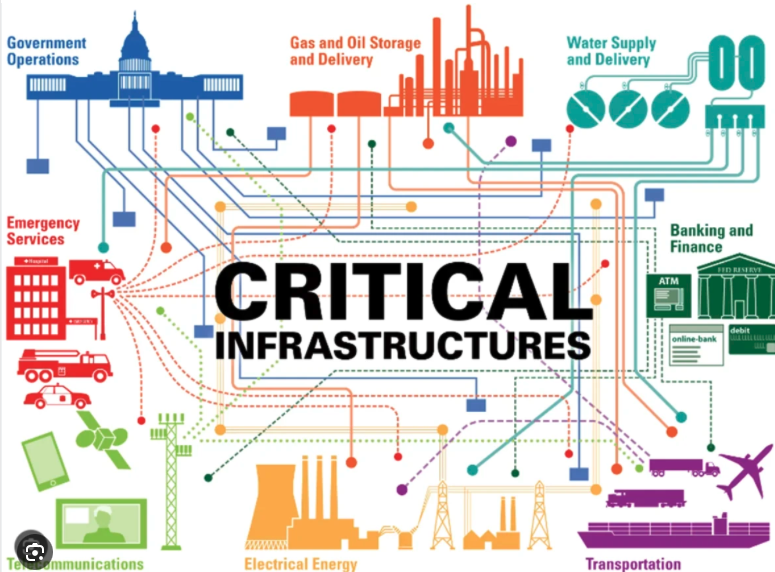
Modern life rests on electricity, water, telecom, cloud services, logistics, ports, health systems, payments, and industrial control networks. These systems are increasingly connected, increasingly indispensable, and increasingly attackable. Which is exactly the sort of design humans would produce right before acting surprised.
a. Critical infrastructure outages and service interruptions will become more disruptive as systems age, interdependence grows, and climate and cyber risks stack together.
Likely time range: 2026 to 2050
Estimated likelihood: High, about 75 to 90%
b. Cyberattacks on supply chains, public services, health systems, utilities, and critical operators will remain a major systemic risk.
Likely time range: 2026 to 2050
Estimated likelihood: High, about 75 to 90%
c. AI-enabled cyber offense, ransomware, and influence operations will likely raise the speed and scale of disruption.
Likely time range: Late 2020s to 2050
Estimated likelihood: High, about 70 to 85%
d. Regions and institutions with weak resilience planning will face higher probabilities of cascading outages across multiple sectors.
Likely time range: Late 2020s to 2050
Estimated likelihood: Moderate to high, about 60 to 80%
How accelerating climate change amplifies this crisis
Climate and cyber risk converge here. Heat, floods, wildfires, storms, and sea-level rise physically weaken infrastructure, while digitization and geopolitical rivalry make its control systems harder to defend.
Specifically:
- Heat and wildfire stress on grids and telecom, raising outage frequency just as cooling demand surges.
- Floods and coastal encroachment threaten ports, treatment plants, roads, rail, substations, warehouses, and data-dependent logistics.
- Repeated physical disruption lowers cyber resilience because organizations spend more resources on recovery and less on hardening.
15. Geoeconomic Fragmentation, Trade Weaponization, and Supply-Chain Balkanization
The global economy is not merely slowing. It is being politically re-engineered through tariffs, export controls, sanctions, industrial subsidies, strategic stockpiling, and resource nationalism. Trade is increasingly treated as a weapon, not just a bridge.
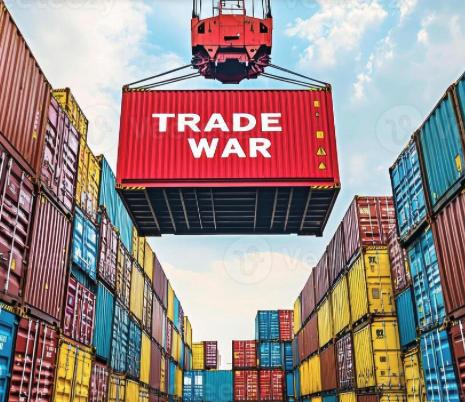
a. Higher trade barriers, policy uncertainty, and economic confrontation will likely keep weakening growth and investment.
Likely time range: 2026 to 2050
Estimated likelihood: High, about 75 to 90%
b. Poorer and import-dependent countries will remain especially vulnerable to food, fertilizer, fuel, and capital shocks.
Likely time range: 2026 to 2050
Estimated likelihood: High, about 75 to 90%
c. Supply chains will become more redundant in some sectors but also more expensive, more politicized, and less efficient overall.
Likely time range: Late 2020s to 2050
Estimated likelihood: High, about 70 to 85%
d. Resource controls and strategic decoupling may intensify interstate tensions and increase the odds of synchronized economic shocks.
Likely time range: Late 2020s to 2050
Estimated likelihood: Moderate to high, about 60 to 80%
How accelerating climate change amplifies this crisis
Climate disruption makes fragmentation more likely by simultaneously increasing food, water, energy, insurance, and disaster costs, while states are already tempted to hoard, subsidize, and weaponize access.
Specifically:
- Climate-driven crop failures and shipping disruptions can trigger export bans and panic procurement.
- Energy shocks tied to heat, drought, storms, or conflict can deepen strategic decoupling and subsidy wars.
- As climate and other adaptation costs rise, governments may prioritize national buffering over international cooperation.
The 15 worst global polycrisis areas or nations where system failure will hit first and hardest
To talk about the true urgency and priorities of the escalating polycrisis in a practical way that engages solutions, one must first understand the highest-priority regions and nations whose worst cumulative and synergistic polycrisis consequences will overlap.
As you will see below, it is not just the weakest nations and regions that will enter cycles of system collapse. Even the most powerful nations on Earth (toward the end of the list 10-15 below) will face major crises.
Here is that list of the biggest global polycrisis problem areas and when and why they will hit severe crisis points:
1. Sudan, South Sudan, Chad, and the wider Sudan-Central Africa corridor
This is the clearest top-tier overlap zone. Sudan is now the world’s largest displacement crisis, Sudan and South Sudan are among the highest-concern hunger hotspots, Chad faces high debt distress risk, and the whole belt sits inside a larger fragility arc with weak coping capacity and severe climate and water stress pressures.
Most dangerous period: 2026-2032, with a second danger window in 2033-2040 if today’s crises harden into a permanent regional emergency.
Most important potential tipping point: 2027-2030, when the Sudan war, famine-risk conditions, cross-border displacement, and donor exhaustion could overwhelm the absorptive capacity of Chad and South Sudan and turn a terrible war into a chronic regional systems failure.
Three biggest drivers: war and mass displacement; extreme hunger and aid shortfalls; weak state and fiscal capacity under climate and water stress. Sudan is already the world’s largest displacement crisis, Sudan and South Sudan remain among the gravest hunger hotspots, and Sudan, South Sudan, and Chad sit inside the World Bank’s fragile/conflict-affected group.
2. The Central Sahel, especially Mali, Burkina Faso, Niger, and spillover zones in northern Nigeria
The Sahel keeps showing up on nearly every bad list humans have invented: conflict, food insecurity, displacement, political fragmentation, climate shocks, and economic fragility. UNHCR describes the Central Sahel as facing worsening insecurity, climate shocks, food insecurity, and economic fragility, while the Fragile States Index explicitly highlights West Africa and the Sahel as regions where global fragmentation is amplifying instability.
Most dangerous period: 2026-2033; then 2034-2042 if insecurity continues to spread southward and coastal spillover accelerates.
Most important potential tipping point: 2028-2032, when insurgency, food insecurity, and climate shocks could push broad rural zones beyond normal state reach and make recovery vastly more expensive and less likely.
Three biggest drivers: conflict and insecurity; food insecurity and economic fragility; climate shocks interacting with rapid demographic pressure. UNHCR describes the Central Sahel as facing worsening conflict, insecurity, climate shocks, food insecurity, and economic fragility, while OECD’s fragility work shows that crisis and instability are converging hardest in already fragile contexts.
3. The Great Lakes and Central African crisis zone, especially the Democratic Republic of the Congo and the Central African Republic
This region is vulnerable because it combines conflict, displacement, hunger, poverty, weak institutions, and intense competition for resources. The DRC is listed by FAO/WFP as a very-high-concern hunger hotspot, while the World Bank classifies both DRC and CAR as fragile/conflict-affected, and the IMF lists CAR as high risk of debt distress.
Most dangerous period: 2026-2034, with a longer-burn danger window in 2035-2045.
Most important potential tipping point: 2027-2031, if eastern DRC violence, mass hunger, disease pressures, and weak institutions lock the region into a durable war economy that keeps spilling across borders.
Three biggest drivers: conflict and displacement; severe food insecurity; chronic institutional fragility. FAO/WFP identified the DRC as a very-high-concern hunger hotspot, and both the DRC and CAR are on the World Bank’s fragile/conflict-affected list.
4. Yemen and the fragile Red Sea Arc
Yemen remains one of the world’s most severe overlap cases because it combines conflict, hunger, weak governance, import dependence, water stress, and external vulnerability. FAO/WFP classifies Yemen as a very-high-concern hunger hotspot, the World Bank includes it in its fragile/conflict-affected group, and UN-Water identifies Western Asia as a region already under significant water stress.
Most dangerous period: 2026-2033, then 2034-2042 if Red Sea insecurity and domestic breakdown continue to feed on one another.
Most important potential tipping point: 2027-2030, when conflict, water scarcity, dependence on food imports, and disruptions to external trade routes could combine to trigger a deeper state-capacity collapse.
Three biggest drivers: chronic conflict, water scarcity and food dependence, and geoeconomic and shipping-route shocks. Yemen has been elevated into the highest-concern hunger tier, remains on the World Bank fragility list, and sits in a wider region already under significant water stress.
5. Afghanistan-Pakistan
This is one of the most dangerous combined-risk pairings because Afghanistan remains extremely fragile and underfunded, while Pakistan is highly exposed to climate and water stress, weak readiness, and regional fragmentation shocks. IMF work on geoeconomic fragmentation finds that Pakistan could be among the countries most affected under a more fragmented global trade order, while UN-Water lists Pakistan among countries with high or critical water stress, and ND-GAIN places Pakistan very low on resilience rankings.
Most dangerous period: 2026-2032, then 2033-2040.
Most important potential tipping point: 2028-2032, when Pakistan’s water stress, infrastructure strain, and weak readiness could collide with Afghanistan spillovers and trade-fragmentation shocks, producing a more openly fiscal and political crisis.
Three biggest drivers: water and food vulnerability; weak readiness and governance; regional fragmentation and security spillover. Pakistan’s ND-GAIN profile shows high vulnerability and very low readiness, including severe water and food indicators, while IMF work specifically groups Pakistan with MENA/CCA economies exposed to fragmentation pressures. Afghanistan remains in the World Bank’s fragile/conflict-affected category.
6. Haiti and the most fragile parts of the Caribbean
Haiti deserves its own spot because it is not just climate-exposed. It combines state fragility, hunger, poverty, weak infrastructure, and repeated disaster shocks. FAO/WFP places Haiti in the highest-concern hunger tier, the World Bank lists it among fragile and conflict-affected situations, and OECD work shows the Caribbean is highly vulnerable due to low coastal settlement patterns, infrastructure gaps, and repeated exposure to extreme weather.
Most dangerous period: 2026-2031, with a second window in 2032-2038.
Most important potential tipping point: 2026-2029, if gang control keeps outrunning the state’s capacity to reassert authority while hunger, displacement, disease risk, and economic contraction deepen.
Three biggest drivers: armed violence and state failure; hunger and economic collapse; storm and infrastructure vulnerability. Haiti is in the highest-concern hunger tier, is on the World Bank fragility list, and IPC reports describe a multi-dimensional crisis marked by repeated recession, large-scale displacement, insecurity, and worsening sanitation and disease risks.
7. Bangladesh and the Bay of Bengal delta zone
Bangladesh is high on the list because dense population, flood risk, heat, salinity, health stress, and food-system vulnerability all stack together there. The World Bank says Bangladesh is among the most at-risk countries in one of the world’s most climate-vulnerable regions, and South Asia’s Indo-Gangetic Plains and Himalayan Foothills, which include Bangladesh, are already experiencing severe health and productivity losses from dirty air on a near-civilizational scale.
Most dangerous period: 2028-2035, then 2036-2045.
Most important potential tipping point: 2030-2035, when repeated shocks from heat, flooding, salinity, and urban overcrowding could simultaneously begin undermining labor productivity, food systems, and migration management.
Three biggest drivers: severe heat and flood exposure; dense population and exposed delta geography; high vulnerability with limited readiness. The World Bank says Bangladesh is among the most at-risk countries in one of the world’s most climate-vulnerable regions, with nearly 90% of South Asia’s population expected to face extreme heat by 2030 and nearly a quarter severe flooding risk; ND-GAIN ranks Bangladesh among the world’s most vulnerable and least ready countries.

8. The non-GCC Middle East and North Africa belt, especially Egypt, Iraq, Jordan, Syria, Tunisia, and Iran
This region ranks highly because water stress, food-import dependence, migration pressure, conflict spillover, youth unemployment, and political fragility overlap in ugly ways. UN-Water identifies Northern Africa as already at critical water stress and Western Asia as stressed as well, while IMF work suggests MENA countries outside the Gulf are among the most exposed to losses from deeper geoeconomic fragmentation.
Most dangerous period: 2026-2034, then 2035-2045.
Most important potential tipping point: 2028-2033, if water scarcity, food import dependence, youth unemployment, and legitimacy crises converge with war spillovers or harsher geoeconomic fragmentation.
Three biggest drivers: water stress; import and fiscal vulnerability; conflict and governance stress. Northern Africa is already experiencing critical water stress; Western Asia is stressed as well, and IMF work warns that MENA economies face complex risks as fragmentation, insecurity, and economic uncertainty intensify.
9. Pacific atoll states and other highly exposed SIDS, especially Kiribati, Tuvalu, the Marshall Islands, and several Caribbean island states
These countries are small, but they are not marginal. They are front-line polycrisis laboratories where debt, food insecurity, sea-level rise, infrastructure weakness, energy dependence, and external financial shocks pile up fast. UN DESA describes SIDS as being on the front lines of climate change, food insecurity, economic shocks, debt burdens, and rising inequalities, while World Bank work on Pacific atolls finds that some of these states face existential adaptation costs and major output losses from rising seas.
Most dangerous period: 2030-2040, with the sharpest existential pressure in 2040-2050.
Most important potential tipping point: 2035-2045, when adaptation costs and repeated damaging events may make managed retreat or mobility planning unavoidable for some communities.
Three biggest drivers: sea-level and storm exposure; tiny fiscal bases and debt burdens; food, water, and infrastructure fragility. UN DESA says SIDS are on the frontlines of climate change, food insecurity, economic shocks, debt burden, and inequality, while World Bank work on Pacific atolls warns that a one-in-20-year climate event in Tuvalu could cause losses equivalent to 50% of annual output by 2050 without urgent action.
10. Ukraine and the Eastern European frontline
Ukraine remains a high-priority polycrisis zone because war, displacement, infrastructure damage, energy insecurity, fiscal strain, demographic stress, and geopolitical confrontation all converge there. UNHCR reports that more than 12.7 million people inside Ukraine were in need of humanitarian assistance in 2025, while the WEF ranks state-based armed conflict among the top near-term global crisis triggers.
Most dangerous period: 2026-2032, then 2033-2040 if the war freezes rather than ends.
Most important potential tipping point: 2026-2029, if donor fatigue, fiscal stress, continued infrastructure attacks, and demographic depletion combine to lock in long-war conditions and weaken the reconstruction base.
Three biggest drivers: war and infrastructure destruction; donor and budget dependence; demographic exhaustion and displacement. Recent reporting shows funding delays, and shortfalls can quickly translate into severe budget pressure and reduced humanitarian support.
Here are the surprisingly stronger countries and major powers that still belong on the polycrisis danger list
These countries are not on the above list because they are the weakest. They are on the list because they are so large, so interconnected, or so infrastructure-heavy that when they wobble, the rest of the world feels it.
11. India
India is one of the strongest cases for a major power that is also deeply exposed to polycrisis. It combines water stress, air pollution, heat stress, food-system risk, urban infrastructure strain, inequality, and sheer scale. ND-GAIN places India relatively low in readiness. The World Bank says India is central to global water-security efforts, and WRI finds India is one of just four countries that account for over half of the global GDP expected to be exposed to high water stress by 2050.
Most dangerous period: 2028-2035, then 2036-2045.
Most important potential tipping point: 2031-2036, when extreme heat, water stress, air pollution, agricultural stress, and urban job pressure could begin reinforcing one another at the national scale.
Three biggest drivers: water stress, heat, and ecological-health stress; massive scale interacting with inequality and governance load. The World Bank says almost 90% of South Asia could face extreme heat by 2030, and ND-GAIN ranks India as vulnerable, even though it has greater readiness than poorer, more fragile states.
12. China
China belongs here because of the overlap between aging, water scarcity, infrastructure dependence, geoeconomic confrontation, and cyber exposure. The World Bank has long identified water scarcity as a strategic development challenge. Layer that onto WEF warnings about geoeconomic confrontation, cyber insecurity, and infrastructure strain, and China becomes a classic systemic-risk country.
Most dangerous period: 2030-2038, then 2039-2050.
Most important potential tipping point: 2032-2038, if rapid aging, labor-force contraction, water-management stress, export-model strain, and harsher geoeconomic confrontation reinforce one another long enough to create a durable legitimacy-and-growth problem.
Three biggest drivers: aging and workforce contraction; geoeconomic fragmentation and trade conflict; climate-water stress interacting with infrastructure and food systems. RAND projects that by 2050, China will have fewer than two working-age adults per person over 65, while other RAND and IMF work point to rising water-management challenges and fragmentation pressures.
13. The United States
The United States belongs on the danger list not because it is likely to be the first case of humanitarian collapse, but because it is a giant amplifier of global shocks. The Fifth National Climate Assessment says climate risks are already worsening across every US region, and 2025 FBI/CISA alerts show repeated concern about cyber threats to critical infrastructure. Add the US role inside trade, finance, information systems, and great-power rivalry, and domestic instability there would ricochet outward very fast.
Most dangerous period: 2028-2036, then 2037-2045.
Most important potential tipping point: 2028-2032, if repeated climate disasters, critical infrastructure cyber incidents, insurance stress, and political polarization begin eroding the legitimacy of responses across multiple states at once.
Three biggest drivers: worsening climate extremes across all regions; cyber and infrastructure fragility; polarization and distrust of governance. The UNIDIR and CISA both underscore that the cyber threat environment surrounding critical infrastructure remains serious and rapidly evolving.
14. Japan, South Korea, Italy, Greece, and Spain
These are not classic fragility states, but they are highly exposed to a different cluster of polycrisis: rapid aging, shrinking workforces, fiscal stress, infrastructure costs, energy dependence, and technological-system vulnerability. OECD projections show the old-age-to-working-age ratio in these countries rising to extreme levels by the 2050s, which means they face a slower-moving but very real resilience problem.
Most dangerous period: 2030-2040, with the deepest structural squeeze in 2040-2050.
Most important potential tipping point: 2033-2042, when aging, shrinking workforces, pension and care burdens, energy and trade vulnerability, and climate-driven infrastructure costs could create a slow but very real resilience trap.
Three biggest drivers: rapid aging and workforce decline; fiscal and pension strain; infrastructure and import dependence. OECD projects that by 2054, the old-age-to-working-age ratio will exceed 70 in Greece, Italy, Japan, Korea, and Spain, with particularly steep declines in the working-age population in several of these countries.
15. Egypt, Turkey, and Mexico
These are stressed middle powers and bridge states. They matter because they sit at the intersection of water stress, trade routes, migration systems, exposure to food and energy, and regional political tensions. WRI finds that India, Mexico, Egypt, and Turkey together account for over half of the global GDP exposed to high water stress by 2050, a stark warning sign for countries that already bear strategic regional burdens.
Most dangerous period: 2028-2036, then 2037-2045.
Most important potential tipping point: 2030-2035, when water stress, migration pressure, trade-route or supply-chain disruption, and domestic political stress could begin reinforcing one another.
Three biggest drivers: water stress, chokepoint exposure to trade and fragmentation, and migration and political-pressure spillovers. WRI finds that India, Mexico, Egypt, and Türkiye together account for over half of the global GDP exposed to high water stress by 2050, while WEF warns that geoeconomic confrontation is now the leading near-term global crisis trigger. These countries are high on the list not because they are weak, but because they are heavily connected and strategically located. When they shake, markets and regions shake with them.
Now that you're aware of the most dangerous areas of the future and the time frames most critical within those areas, you're ready for the polycrisis conclusion. Before you go on to the conclusion, while you were reading, did you notice how many different negative consequences and crises cluster around the next 5 to 10 years, and how the percentage probabilities of many of these consequences and crises generally range significantly above 70 to 80%? Did you notice how many tipping points cluster within a 10- to 20-year window from now? If you did, you are getting a good understanding of our preparation, adaptation, and resilience-building window as we work on solutions.
Conclusion: Urgency Without Surrender, and the Critical Challenge
The places in the greatest danger listed above are those where fragility, food stress, water stress, debt stress, displacement, conflict, and climate pressure all overlap. But the places the whole world should fear the most are the ones where that overlap hits large, systemically central powers like India, China, and the United States, because those shocks do not stay local.
Those cumulative and synergetic shocks travel through food markets, migration routes, finance, supply chains, energy systems, data systems, and war. Civilization, in its usual charming fashion, has made sure everything important now shares the same wiring.
But the greatest danger in the rapidly unfolding global polycrisis is not merely that many crises are worsening simultaneously. It may be that the systems humanity depends upon to absorb shocks, buy time, and prevent panic are themselves beginning to weaken, overload, or fail.
Those systems are the buffers: emergency food aid, public health capacity, insurance, infrastructure maintenance, energy reserves, fiscal rescue capacity, disaster response systems, supply-chain redundancy, trusted information systems, and the public’s basic belief that their governments can still protect them when things go wrong.
When those buffers are strong, societies can survive even very serious shocks. When those buffers erode, the same shocks become far more destructive, spread faster, last longer, and trigger new crises elsewhere in our human systems.
This is why this buffer failure factor is so critical to understanding the speed and direction of the polycrisis. A drought is no longer just a drought when crop insurance is failing, aquifers are depleted, food reserves are thin, governments are debt-stressed, and social trust is collapsing. A flood is no longer just a flood when emergency management systems are overwhelmed, infrastructure is old, hospitals are overloaded, and displaced people have nowhere stable to go.
A cyberattack is no longer just a cyberattack when the electric grid, communications systems, banking systems, and public warning systems are tightly interconnected, and no backup capacity remains. In a true polycrisis, the problem is not simply that bad things happen. The problem is that the mechanisms and buffers that once contained bad things are being exhausted at the very moment they are most needed.
This is the real nightmare polycrisis scenario now taking shape. Climate shocks increase food insecurity. Food insecurity drives migration and unrest. Migration and unrest intensify political extremism, border stress, and conflict. Conflict disrupts trade, energy systems, and public budgets. Economic stress weakens health systems, emergency response systems, welfare systems, and infrastructure maintenance. Disinformation and polarization then sabotage coordinated response precisely when coordination matters most.
And every time governments fail visibly, public trust falls further, making the next emergency even harder to manage. This is how a multidirectional polycrisis becomes a self-amplifying cascade. It is not one domino hitting the next in a neat line. It is a whole table shaking until everything unstable begins falling at once.
Once buffer failure reaches a certain level, societies can enter a far more dangerous zone in which recovery from one shock is never complete before the next arrives. That is when an emergency becomes normal.
That is when adaptation budgets become permanently inadequate. That is when aid systems become triage systems. That is when insurance becomes unaffordable or unavailable. That is when governments stop solving problems and start rationing pain. And that is when populations begin to lose faith not only in leaders but in the future itself.
If we want to prevent the worst outcomes of the polycrisis, we cannot focus only on reducing the visible threats. We must also urgently rebuild and protect the buffers that keep those threats from cascading into systemic collapse. That means restoring resilience in food systems, water systems, public health, infrastructure, emergency response, fiscal capacity, truthful information systems, and democratic legitimacy.
Because in the end, civilizations rarely fall only because hazards grow larger. They fall because, little by little and then all at once, their shock absorbers fail. And when the shock absorbers fail in a tightly interconnected world, history stops being gradual.
The final hard truth about the urgency of the global polycrisis for our politicians and governments is that it is no longer a theoretical problem. It is an implementation problem.
The warning lights are already flashing bright red across food, water, health, migration, debt, trust, ecology, infrastructure, and security. Climate change makes almost all of those red warning lights blink faster, brighter, and more expensively.
But the urgency of a polycrisis is not the same as hopelessness. The next two decades still contain a real margin for better human choices. Governments can reduce emissions quickly, protect food and water systems, harden infrastructure and cyber defenses, restore public-health capacity and other emergency buffers, preserve democratic legitimacy, and reduce the inequality that turns every shock into a social explosion.
They can also keep pretending that each crisis is separate, temporary, or someone else’s problem. One of those paths is difficult. The other is ruinously catastrophic and stupid.
The hopeful fact is that many of the same actions that reduce climate risk also reduce wider polycrisis risk: resilient infrastructure, healthier ecosystems, better early warning, fairer social policy, cleaner energy, stronger public health, more honest information systems, and institutions that plan beyond the next election cycle. Humanity still has agency. The meta-systems collapse window is not closed. It is, however, very much on fire.
So the final message and challenge is that to overcome the growing cumulative and synergetic threats of the escalating global polycrisis to the future survival of humanity, the governments of the world will have to immediately begin cooperating at a transnational level never before achieved in human history. Unfortunately, there are currently no high-level transnational committees or bodies that represent all nations of the world to acknowledge, confront, or collectively resolve the escalating polycrisis at the required multinational and transnational levels.
The United Nations is definitely not the solution because it lacks a multinational and transnational legislative, enforcement, and punitive mechanisms to address any of the singular transnational crises listed above, let alone the collective polycrisis. In the simplest terms, humanity as a collective is being managed like a car without a driver in the driver's seat, while the car is racing towards a climate change-driven acceleration and a cliff where widespread global system collapse, chaos, and catastrophe are inevitable.
We are at the point where the above polycrisis is now controlled by the absence of a true multinational and transnational power capable of legislating and enforcing all of the transnational changes needed to save humanity and its future.
If you are a visual person, here is what the final illustrated polycrisis urgency looks like.
The first resource and timetable graph below is the MIT Club of Rome systems-collapse graph, which did not include climate-change factors.

The second resource and timetable graph below is from Job One for Humanity, which incorporates current climate change conditions into its calculations and shows that humanity did not come close to the critical 2026 global fossil fuel reduction targets. As you can see, when climate change is added to the equation, major problems for humanity begin to occur as various factors start converging around 2030, in alignment with the newer information in this article, but considerably sooner than in the original MIT Club of Rome studies that did not include current climate change data. (To see all the information behind the MIT and Club of Rome graphs, please see the three articles done by Job One For Humanity that begin here.)


FAQ
What is a polycrisis?
A polycrisis is a cluster of major risks that do not stay in their own lanes. They interact, amplify one another, and generate consequences worse than the sum of their parts.
Why is climate change both its own crisis and woven through the other crises?
Because climate change is both a direct physical destabilizer and a threat multiplier. It deserves its own full section, but it also alters the severity and timing of stresses across food, water, migration, health, infrastructure, finance, and governance.
Are the likelihood percentages exact predictions?
No. They are evidence-based confidence estimates meant to show the dominant direction of risk, not a fake level of point precision. Reality remains regional, nonlinear, and unpleasantly interactive.
What should politicians and governments do first?
Treat this as a systems-level emergency, not a messaging problem. Protect food, water, health, energy, and infrastructure resilience first; radically and immediately reduce fossil-fuel emissions and pollution; harden cyber and public-health systems; preserve social trust; and stop treating long-term prevention as optional.
What should ordinary readers take away from this page?
Do not think in isolated headlines. Watch how one stress makes another harder to manage. That is where the real danger lives, and it is also where better preparation and better policy can still reduce harm.
Glossary
- Polycrisis
- A situation where multiple crises interact and amplify one another instead of remaining separate.
- Overshoot
- Using resources and ecosystem services faster than nature can regenerate them.
- Threat multiplier
- A condition that makes other risks more severe, more frequent, or harder to manage.
- Hydrologic whiplash
- Rapid swings between heavy rain, flooding, drought, and unstable runoff patterns.
- Wet-bulb heat
- A combination of heat and humidity that limits the body’s ability to cool itself.
- Cryosphere
- Earth’s frozen water systems, including glaciers, snowpack, sea ice, and ice sheets.
- Albedo
- The reflectivity of a surface. Snow and ice reflect more sunlight than darker land or water.
- AMOC
- The Atlantic Meridional Overturning Circulation, a major ocean circulation system that affects regional climate.
- Managed retreat
- Planned movement of people or infrastructure away from repeatedly unsafe locations.
- Uninsurability
- A condition where insurance becomes unavailable or unaffordable in high-risk places.
- Geoeconomic fragmentation
- The politically driven weakening or reversal of global economic integration through tariffs, export controls, sanctions, subsidies, and strategic decoupling.
- Critical infrastructure
- Systems whose failure would seriously damage public safety, health, economy, or security, such as power, water, transport, communications, and health care.
- Cyber resilience
- The ability to prevent, absorb, recover from, and adapt to cyber disruptions.
- Antimicrobial resistance
- The reduced effectiveness of medicines against bacteria, fungi, or other microbes.
- System fragility
- A condition in which a system has low ability to absorb shocks without failing.
References and bibliography
-
- United Nations, World Population Prospects 2024
- UN DESA, World Urbanization Prospects
- FAO, The Status of the World’s Land and Water Resources for Food and Agriculture
- FAO, The State of World Fisheries and Aquaculture 2024
- UN-Water, Global water security and drought findings
- WHO, Air pollution
- UNEP, Global Environment Outlook and pollution resources
- IPBES, Global Assessment Report on Biodiversity and Ecosystem Services
- UNHCR, Global Trends
- World Bank, Fragility, Conflict, and Violence
- SIPRI Yearbook and nuclear risk materials
- World Bank, Global Economic Prospects
- IMF, Fiscal Monitor
- Freedom House, Freedom in the World 2026
- V-Dem Institute, Democracy Report 2026
- WHO, Pandemic Agreement
- WHO, antimicrobial resistance global call to action
- World Bank, Poverty, Prosperity, and Planet Report
- OECD, Generative AI
- OECD, Digital security risk management
- OECD, Ensuring the resilience of critical infrastructure
- UNIDIR, Securing Cyberspace for Peace
- World Economic Forum, Global Risks Report 2026
- World Economic Forum, Global Cybersecurity Outlook 2025
- OECD, Economic Security in a Changing World
- IPCC AR6 Working Group I, Summary for Policymakers
- IPCC AR6 Working Group II, Impacts, Adaptation and Vulnerability
- WMO, State of the Global Climate
- WHO, Climate change and health
- ILO, Ensuring safety and health at work in a changing climate
- World Bank, Groundswell: Acting on Internal Climate Migration
Key internal Job One links relating to this page
The list below preserves the most important internal pathways and context links from the original polycrisis page family so they do not vanish in the rewrite.
-
- Climate Change Solutions: Practical and Effective Preparation, Adaptation, Resilience-Building, and Actions to Fix Climate Change, Our PLAN B
- Feeling Grief, Anger, Sad, or Anxious About Climate Change or the Environment? Here is How to Heal That.
- Evolutionary Benefits, Hope, and Perspectives on Humanity's 13 Global Crises. Why A Great Rebirth is Possible!
- Primary and Secondary Climate Change Consequences
- The definition of irreversible global warming and climate change
- UN, IPCC Climate Change Underestimation Problem: Why the Real-World Danger May Be 20-40% Worse
Strongly Recommended
-
- The Climageddon Feedback Loop Explained
- Global Collapse: Probabilities, Factors, and Timetables. Was MIT right?
- Was the Club of Rome & MIT study right about soon-arriving resource shortages and the collapse of humanity? Part 2
- When will global civilization collapse due to accelerating climate change AND the verified Club of Rome/MIT studies' global collapse factors? Part 3
This document was created in cooperation between the Universe Institute and Job One For Humanity. The lead DMAP analyst on this project was Lawrence Wollersheim.

Receive Free Climate Change and Global Warming Alerts and Info!
Please donate any amount to help keep our 100% publicly funded nonprofit think tank free for everyone! Help us continue to provide the public with uncensored climate change forecasts, facts, and solutions.
With every donation of any amount, you will get amazing gifts! Click the donate image below to see what these gifts are.

To help do something about the climate change and global warming emergency, click here.
Sign up for our free Global Warming Blog by clicking here. (In your email, you will receive critical news, research, and the warning signs for the next global warming disaster.)
To share this blog post: Go to the Share button to the left below.
Showing 1 reaction